JOINT PRESS RELEASE 23/03/2026
An unprecedented mass poisoning of wildlife is shocking the nation
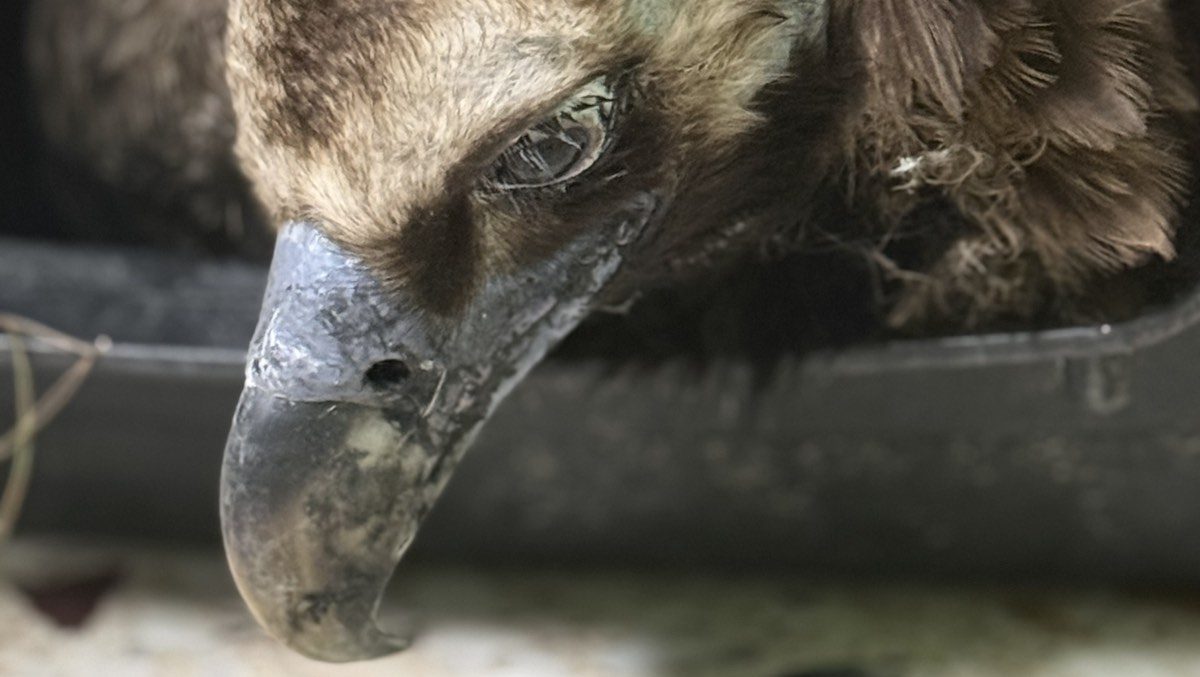
Since Wednesday, March 11, one of the most serious incidents of mass wildlife poisoning in the last five years has been unfolding in the Dadia-Lefkimi-Soufli National Park. So far, nine cinereous vultures, four buzzards, four ravens, one wolf, five foxes and two martens have been found dead, while three cinereous vultures were found alive in time, showing symptoms of poisoning.
Scattered at strategically selected locations in the heart of the National Park, poisoned baits—remnants of roe deer—were discovered by the four Special Poisoned Bait Detection Units of the Society for the Protection of Biodiversity of Thrace, the 2nd Orestiada Hunting Association, and the NECCA Management Units of the Nestos-Vistonida-Rodopi and Koroneia-Volvi-Chalkidiki National Parks. Since then, relevant and local authorities have mobilized, while environmental organizations across the country are calling for an immediate and effective investigation of the incident and for it to be treated as organized crime.
The cinereous vulture is a scavenging bird of prey and a symbol of the Dadia Forest, which is home to the only naturally breeding colony of this species in the Balkans. The species has been the subject of long-standing conservation efforts, and the loss of such a large number of individuals, relative to the species’ small population, not only reverses years of national and cross-border conservation efforts, but also results in significant financial damage to the state.
This particular incident, although one of the most serious in recent years, is merely the tip of the iceberg, as dozens of cases of wildlife poisoning (including of strictly protected species such as the Griffon Vulture and the Golden Eagle) are recorded throughout the country, yet in no case have the perpetrators of these crimes been identified and punished. Indicatively, between 1995 and 2025, 22 poisoned cinereous vultures have been found in the Dadia Forest National Park.
The mechanisms, protocols, funding, and relevant training for the competent authorities to manage such incidents are in place. The use of poisoned baits has been banned in Greece since 1993, and it was not until 2022 that a Joint Ministerial Decision was enacted to control the illegal use of poisoned baits. However, this most recent incident serves as a stark reminder that the implementation of the above remains inadequate. It is also a sad confirmation that the perpetrators’ impunity and contempt for the institutions have reached a new low.
Given the seriousness of this incident, the undersigned organizations call on the State:
– To utilize all means at its disposal to investigate criminal offenses, such as interrogations, analysis of traffic camera footage, lifting of telecommunications secrecy, etc.
– To immediately conduct thorough and comprehensive on-site investigations, toxicological tests on the findings, and autopsies of all deceased individuals in order to compile a comprehensive case file.
– To decisively coordinate all involved institutions and services to ensure optimal communication and effective cooperation in resolving the case.
In the coming days, environmental organizations and other entities in the country will request an emergency meeting with the leadership of the Ministry of Environment and Energy to discuss the issue in detail and determine the next steps to be taken. If this crime too goes unpunished, it will be the most glaring admission of our failure to protect nature from the threat of poisoning!
Call to local residents and visitors:
Anyone in the area of the Dadia-Lefkimi-Soufli National Park who spots a dead animal, a live bird that cannot fly or any other wild animal with an obvious problem should not ignore it. Call the Forest Service (1591) and the local NECCA Management Unit. With the active participation of citizens, some victims can be saved in time and further losses can be prevented.
JOINT PRESS RELEASE from the National Working Group Against Poisoned Baits:
ANIMA, ARCTUROS, Hellenic Society for the Protection of Nature, Hellenic Ornithological Society, Society for the Protection of Biodiversity of Thrace, Callisto, Natural History Museum of Crete, WWF Greece.
Notes for reporters:
– Accompanying photos are available HERE
– Mass killing of cinereous vultures in the Dadia Forest—A significant blow to one of Europe’s rarest birds of prey: https://necca.gov.gr/nea-anakoinoseis-deltia-typou/maziki-thanatosi mavrogypon-sto-dasos-dadias-simantiko-pligma-gia-ena-apo-ta-spaniotera-arpaktika-tis-evropis
– New case of mass poisoning of wildlife in Evros National Park with 48 dead animals: https://spbt.gr/neo_peristatiko_dhlhthriashs/
For more information:
Hellenic Ornithological Society: Roula Trigou, Communications Coordinator | Tel. 210 8228704 ext. 120 | Cell: 6977 528200 | rtrigou@ornithologiki.gr